It Is Not Enough to Love Your Clients…They Have to Feel It

Amar Pandit , CFA , CFP 

Amar Pandit
A respected entrepreneur with 25+ years of Experience, Amar Pandit is the Founder of several companies that are making a Happy difference in the lives of people. He is currently the Founder of Happyness Factory, a world-class online investment & goal-based financial planning platform through which he aims to help every Indian family save and invest wisely. He is very passionate about spreading financial literacy and is the author of 4 bestselling books (+ 2 more to release in 2020), 8 Sketch Books, Board Game and 700 + columns.

October 13, 2026 | 18 Minute Read
In my last essay, I wrote about a wonderfully simple customer acquisition model.
Some of them will love you back.
They will tell their friends about you. Some of those friends will come to you, some will not, and that is perfectly fine.
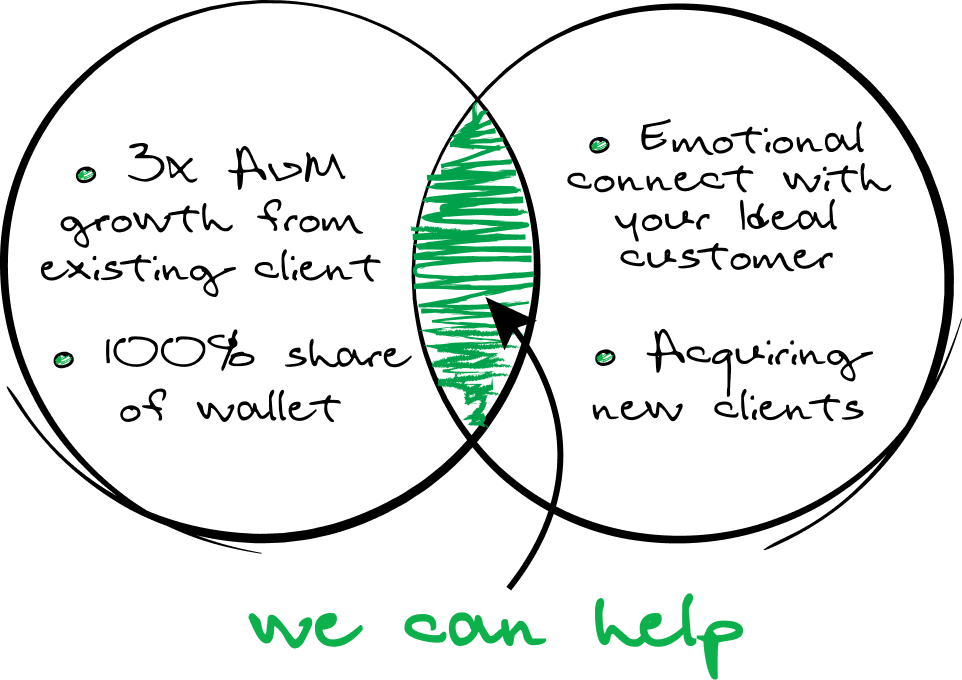
The central idea was that perhaps the most powerful customer acquisition strategy does not begin with acquiring new customers at all. It begins with creating such an extraordinary experience for the clients you already have that talking about you becomes natural.
However, there is another question I have been thinking about since writing that essay. I think it is a far more uncomfortable one.
Do your clients feel the love?
Almost every MFD I know will instinctively answer yes. Of course I care about my clients. I believe them when they say this.
Many MFDs have served the same families for twenty or thirty years. They have seen children grow up, businesses get built, parents retire and wealth pass from one generation to another. They have answered calls on Sundays, worried about clients during difficult markets and spent countless hours thinking about their portfolios.
There is often genuine affection behind these relationships. There is an important distinction that you must understand.
Caring about someone and making someone feel cared for are not the same thing.
One is an intention… The other is an experience.
Clients cannot see our intentions. They can only experience our actions.
That difference may appear small, but I believe it is one of the most important ideas for anyone building a financial services business.
You may genuinely care about a client, but if the only time he hears from you is when there is a transaction to complete, what does he experience?
You may spend hours researching his portfolio, but if every review meeting revolves around performance numbers and fund recommendations, what does he experience?
You may have served a family for fifteen years, but if something happens to the primary financial decision-maker and the spouse has no idea who to call, what has the family experienced?
You may know every fund in a client’s portfolio, every SIP, every folio number and perhaps even every return since inception. How much do you know about the life behind that portfolio? Do you know that his daughter is leaving for university next year, that he is increasingly worried about his ageing parents or that somewhere inside him is a desire to retire at 55 that he has never quite had the courage to articulate? Do you know that his wife worries about what she would do with the family’s finances if something happened to him? Or that despite having Rs. 20 Crore, he occasionally wakes up wondering whether he really has enough?
These are not investment questions. They are life questions that happen to have financial consequences. Somewhere along the way, I believe our profession became extraordinarily good at knowing portfolios and surprisingly poor at knowing the people those portfolios belong to. We know what clients own, but not always what they fear. We know their asset allocation, but not necessarily what keeps them awake at night. We know their risk profile, but perhaps not the responsibilities, dreams and relationships that ultimately give all that money its meaning.
This is why I believe we need to redefine what client experience means. It is easy to confuse client experience with beautiful reports, faster transactions, sophisticated technology, elegant offices and seamless apps. These things certainly matter. They demonstrate professionalism and make dealing with us easier. However, they are not, by themselves, care. Care begins when our understanding of the client’s life goes beyond what is necessary to sell, advise on or service a financial product. It begins when the client senses that we are not merely looking after his money but thinking about what that money is ultimately supposed to protect and make possible.
Think about the moments in your own life when you have felt genuinely cared for. It was probably not because somebody told you how much they cared. You felt it because they remembered something you had forgotten telling them. They called when they needed nothing from you. They noticed something was wrong before you said it. They anticipated a need before you expressed it or showed up when circumstances became difficult. Occasionally, they did something so unexpected that you found yourself thinking, “They didn’t have to do that.” There is something profound about that sentence because many of life’s most memorable experiences happen in the space between what somebody was required to do and what they chose to do anyway.
The wealth business is no different. Imagine a client whose portfolio has fallen sharply during a market correction. Intellectually, he understands volatility. You have explained it many times. He has seen the historical charts, heard the presentations about long-term investing and agreed that market declines are an inevitable part of earning long-term returns. However, intellectual understanding and emotional experience are two completely different things when his own portfolio is suddenly down Rs. 40 Lakh. Headlines are frightening, WhatsApp groups are full of predictions, one friend has already moved to cash and somebody on television is confidently forecasting an even bigger crash. He begins checking his portfolio several times a day, and despite everything he knows, doubt slowly enters the room.
Then his phone rings. It is you. There is no transaction to complete and nothing to sell. You simply say, “I thought you might be worried, and I wanted to speak before you felt you needed to call me.” Technically, almost nothing has happened. No portfolio was changed, no fund was purchased, no SIP was registered and not a rupee of revenue was generated. Emotionally, everything may have changed. The client has just experienced what it means to know that somebody is watching his financial back. There is a good chance he will remember that phone call far longer than the 14.3 per cent return you showed him during last year’s review.
This brings me to something I believe most financial businesses dramatically underestimate: the moments clients remember are rarely the moments firms measure. Our systems measure AUM, SIPs, transactions, redemptions, revenue, leads, conversions, review meetings and response times. These matter. But there is no column in most MIS reports called “client felt reassured today.” There is no dashboard showing “family feels financially organized,” no CRM metric called “prevented client from making a terrible decision during panic,” and no revenue report that says, “widow knew exactly whom to call.” Yet these invisible outcomes may have far more to do with whether a family stays with you for thirty years than many of the numbers we meticulously track.
Think about the irony. We have become exceptionally good at measuring what is easy to count and remarkably poor at measuring what is hardest to replace. A client may forget which fund you recommended in 2017. He may forget whether his portfolio returned 11.8 per cent or 12.4 per cent in a particular year, and he will almost certainly forget most of the slides you showed him across twenty annual reviews. However, he may never forget that when his father died, you called before he did. He may never forget that when his business was struggling, you advised him against an investment even though saying yes would have earned you money. He may never forget that when markets collapsed, you prevented him from making a decision he would have regretted for the next decade. He may never forget that before his daughter left to study abroad, you had already thought through financial issues he had not yet considered.
Businesses remember transactions. Human beings remember moments. If we want to build financial businesses around genuine care, perhaps we need to become much more intentional about recognizing what I call Moments of Care. Every long financial relationship contains them. Some arrive loudly: retirement, death, inheritance, marriage, divorce, the sale of a business, a child going abroad, an ageing parent becoming dependent, a health crisis, a job loss or a major market crash. These are moments when the client’s financial life and emotional life suddenly collide, and the relationship with the financial professional is tested in a way no annual review ever could.
Many Moments of Care arrive much more quietly. It may be the client approaching 50 who suddenly begins wondering whether he has done enough. It may be the successful entrepreneur who has accumulated more money than he could reasonably spend but still feels strangely insecure. It may be the widow who knows almost nothing about investments because her husband always handled everything. It may be a young inheritor receiving enormous wealth before developing the wisdom to deal with it. It may simply be the client whose portfolio is doing perfectly well until his friend makes a fortune in gold and he suddenly begins wondering whether he is falling behind.
From the outside, these moments appear to be about money. On the inside, they are usually about something far more human: fear, uncertainty, responsibility, identity, comparison, loss, freedom or the desire to know that everything is going to be okay. This is precisely where a great financial professional becomes invaluable. It’s not because he always knows which market will rise next or which product will deliver the highest return, but because he understands what the moment requires. Sometimes it requires guidance. Sometimes it requires action. Sometimes the greatest value comes from preventing the client from acting. Many a times it requires nothing more sophisticated than being there when being there matters.
I think we dramatically underestimate the value of presence in financial relationships. Clients rarely tell stories about ordinary service because ordinary service is expected. They tell stories about extraordinary presence. They remember the person who appeared before being called, who listened when there was nothing to sell, who understood when a spreadsheet could not, and who stayed calm when everybody else was losing theirs. The greatest client experiences are often created not by doing extraordinary things every day, but by doing the right thing during the few days the client will remember forever.
This also explains why two clients of the same financial firm can describe their experience completely differently. They may own similar funds, receive similar returns, and have access to exactly the same technology. Yet one says, “They are good,” while the other says, “I cannot imagine managing my financial life without them.” What created that enormous difference? Very often, the second client experienced a moment when the relationship became real. Something happened in his life, and somebody showed up.
Before that moment, you were his MFD. After that moment, you became his financial professional.
This is one of the most important transitions any of us in this profession can ever earn.
Now we arrive at what I believe is the harder question for every growing MFD: Can care scale? When you have fifty families, perhaps you can remember almost everything yourself. You know whose son is studying medicine, whose daughter is getting married, whose mother is unwell, who is selling his business and who becomes nervous every time the market falls ten per cent. Much of this information lives naturally inside the founder’s head, and the client feels known for the simple reason that the founder knows him.
Then the business grows. Fifty families become 200, then 500 and eventually 2,000. A team is built, technology arrives, processes are created, CRMs are implemented and automation begins taking care of repetitive work. All of this is necessary. In fact, none of us can build a large, enduring wealth business without it. The organization becomes faster, more professional and more efficient. Something else however can happen almost invisibly along the way: efficiency can quietly replace intimacy. The client who once felt known begins to feel processed. The phone call becomes a ticket, the conversation becomes a template, the annual review becomes a presentation, and personal knowledge becomes another field inside the CRM. The client may receive faster service, better technology and more sophisticated reports, yet somehow feel less understood. The organization becomes better while the relationship becomes poorer.
That may be one of the greatest risks of scale in a wealth business. The real question is therefore not whether we should use technology, build processes or automate routine work. Of course we should. The far more interesting question is: How do you scale care without industrializing it? Technology should help us become more human, not less. A CRM should not merely remind us that a SIP is due; it should help us remember that a client’s daughter is graduating next month. Data should not merely tell us that a family has Rs. 8 Crore invested; it should help us understand that Rs. 2 Crore will be required over the next four years for something deeply important to them. AI should not merely help us write faster emails; it should free our financial professionals from routine work, so they have more time for conversations requiring judgement, empathy and wisdom. Automation should not replace care. It should create more capacity for care.
This changes the question we ask about productivity. Instead of asking only, “How many more clients can one relationship manager handle?”, perhaps we should also ask, “How much more deeply can one relationship manager understand the clients he already serves?” Those two questions can create very different organizations. One uses technology primarily to increase capacity. The other uses technology to increase humanity. The finest wealth firms will learn to do both.
There is an even more difficult challenge. If the founder is the only person capable of making clients feel cared for, the firm has not really created a culture of care. It has created a dependency on the founder. This is particularly relevant for MFDs because many wonderful businesses have been built around extraordinary individuals whom clients have known and trusted for decades. What then happens when that founder is unavailable? What happens when the client speaks to the second person in the organization, or the fifth, or eventually the fiftieth? Does the feeling change? This is one of the most important tests of whether you have built a practice or an institution: Can the fiftieth employee make a client feel the same care that the founder once made him feel? Not by imitating the founder’s personality, but by sharing the same philosophy about how another human being’s financial life should be treated.
That cannot be accomplished through a customer-service script. You cannot write an SOP that says, “Show empathy here.” Genuine care cannot be manufactured, but the environment in which care happens can certainly be designed. You can create systems that capture what matters in a family’s life. You can design meetings that begin with what has changed in the client’s life rather than what has changed in his portfolio. You can identify important life events before they become financial emergencies, empower people to solve problems without forcing clients through five levels of approval and teach teams that some of the most valuable things they will do all day may not generate a single rupee of revenue. Care itself cannot become a process, but processes can make extraordinary care more likely.
This is where culture becomes extraordinarily important. Culture is rarely what appears on the office wall. Culture is what people observe being rewarded. If an organization says “client first” but celebrates only sales numbers, employees understand the real message. If relationship managers are measured only on revenue, they will eventually optimize for revenue. If every conversation must produce a transaction before it is considered productive, clients will eventually begin feeling like transactions. You cannot create a culture of care while measuring people as though care does not matter.
This is also one of the most important transitions a founder has to make. In the early years, you deliver the care. As the organization grows, your job changes. You must design an environment in which care can be delivered by other people. Eventually, if you have done your job exceptionally well, clients should be able to feel the philosophy of the founder even when the founder is nowhere near the room. That is what scale should really mean in a relationship business. It’s not merely serving more people but serving more people without losing what made people love you when you were small.
There is another important dimension to care that we often misunderstand. Caring for a client does not mean saying yes to everything the client wants. In fact, sometimes the deepest expression of care is saying no. No, I don’t think you should invest in that product. No, I don’t think you should increase equity merely because markets have gone up. No, I don’t think you should redeem everything because markets have fallen. No, I don’t think chasing your friend’s returns is going to improve your financial life. A salesperson may worry that saying no will upset the client. A professional who genuinely cares understands that sometimes disappointing the client today is precisely how you protect him tomorrow. Care without courage quickly becomes pleasing. Our profession does not exist merely to please clients. It exists to help them make better financial decisions.
That is why genuine care is not sentimental. It requires competence, judgement, honesty and occasionally very difficult conversations. Sometimes it even requires being willing to risk the relationship to do what you genuinely believe is right for the client. Sending birthday messages is thoughtful. Remembering anniversaries is thoughtful. Writing “client first” on your website is easy. None of those things captures the essence of care. Care is taking responsibility for the quality of another person’s financial life.
Think about that sentence. A client may have spent thirty years creating his wealth. His children’s education may depend on it. His retirement, his spouse’s security, his parents and his ability to stop working someday may depend on it. His freedom to walk away from a job he hates may depend on it. Even his ability to sleep peacefully during the next market crash may depend partly on the decisions you help him make.
That is not merely distribution. That is not merely portfolio management. That is financial care.
When clients experience that kind of care consistently, they stop evaluating you only through returns. They stop comparing every fund with whatever performed best last year or wondering whether somebody else can save them ten basis points. The relationship has moved somewhere much deeper because you understand their lives, their history, their family, the decisions already made and why they were made. You understand what enough means for them. Most importantly, they know that when something unexpected happens, they will not have to navigate it alone. That feeling is extraordinarily valuable precisely because it is extraordinarily difficult to replace.
This may become even more important in the years ahead. Technology will become available to everyone. Research will become available to everyone. Portfolio analytics will become available to everyone. AI will make enormous amounts of knowledge inexpensive and instantly accessible. Many of the information advantages financial professionals once possessed will gradually disappear. There is one thing though that will remain profoundly human: the feeling that somebody truly understands me and genuinely has my back. That is extraordinarily difficult to commoditize.
The finest wealth businesses of the future will therefore not choose between technology and humanity. They will combine extraordinary technology with extraordinary humanity. They will use technology behind the scenes so the human experience in front of the client becomes better. They will automate what should be automated so their people have more time for what should never be automated. They will scale processes without scaling indifference and grow larger without allowing relationships to become smaller. Because clients do not experience how much you care about them. They experience how much care reaches them.
You may love your clients. Your team may love your clients. Your organization may genuinely believe it exists to improve their financial lives. However, intentions trapped inside an organization create no client experience. Care must travel. It must travel from the founder to the team, from the team into the process, from the process into the conversation and from the conversation into the client’s life. Ultimately, it has to arrive at the other end not as an organizational value or a sentence on a website, but as a feeling: somebody knows me, somebody understands what matters to my family, somebody will tell me the truth, somebody will call when things become difficult, somebody is thinking about things I may not even know I should be thinking about. Somebody has my back.
That is when care becomes real. This takes us back to where this entire idea began. I wrote earlier that maybe we have made customer acquisition far more complicated than it needs to be, and that one of the most powerful ways to acquire the next client may simply be to love the one you already have. I still believe that. I would now add something even more important: it is not enough to love your clients. They must know it. They must experience it. Above all, they must feel it.
When clients genuinely feel cared for, they remember. When they remember, they stay. When they stay, trust deepens. When trust deepens, relationships begin travelling across generations. Sometimes, somewhere at a dinner table where you are not present, somebody asks them a very simple question: “Do you know a good financial professional?” Your client does not need to think. Your name simply comes out. Not because you asked for a referral, not because your marketing team ran a campaign and not because somebody reminded them to make an introduction. Your name comes out because when they thought of someone they trusted with their financial life, they thought of you.
That is the most beautiful outcome of all. It looks like marketing from the outside, but it was never really marketing. It was simply the natural consequence of thousands of moments in which people felt understood, protected and cared for.
That is not a marketing strategy. That is what happens when care becomes your strategy.

Similar Post
Featured
The Meaningful Work You Do - Part 2
Amar Pandit , CFA , CFP
If Part 1 was a reminder of the why, then this is an invitation to go deeper into the how.
Let’s get one thing clear.
You are not in the business of SIPs.
You are not in the busi ....
Read More
8 April, 2025 | 5 Minute Read
Featured
Moths and Your Direction
Amar Pandit , CFA , CFP
There is an interesting story about moths that I read in Ozan Varol’s book, “Awaken Your Genius.” What struck me about this was the striking resemblance to the evolution of o ....
Read More
25 July, 2023 | 6 Minute Read
Featured
You Were Always Enough
Amar Pandit , CFA , CFP
There’s a silent weight many financial professionals carry. It doesn’t show on resumes. It doesn’t appear in AUM reports or commission statements. But it’s there, quietly s ....
Read More
29 July, 2025 | 6 Minute Read
Featured
It’s Only Scrambled Eggs
Amar Pandit , CFA , CFP
A few days ago, I sat in a beautiful restaurant called Sushisamba in Edinburgh. I didn’t expect to find anything extraordinary, just a simple meal to keep me going for the day ah ....
Read More
15 July, 2025 | 7 Minute Read
Featured
This Magic Pill will solve all your problems...
Amar Pandit , CFA , CFP
Tell me if this sounds familiar.
● You are wasting time working with too many non-ideal clients who blame you for everything that ever goes wrong.
● You aren’t sure ....
Read More
3 August, 2021 | 6 Minute Read
Featured
Why Your Practice Valuation Isn’t Comparable to an Asset Manager’s?
Amar Pandit , CFA , CFP
Valuing a wealth practice is a nuanced and complex process. But one of the most common misconceptions among many distributors is this: “If an asset manager is valued at 4-5% of t ....
Read More
10 December, 2024 | 5 Minute Read


- 1
- 0

0 Comments