Psychological Flexibility and You

Amar Pandit
A respected entrepreneur with 25+ years of Experience, Amar Pandit is the Founder of several companies that are making a Happy difference in the lives of people. He is currently the Founder of Happyness Factory, a world-class online investment & goal-based financial planning platform through which he aims to help every Indian family save and invest wisely. He is very passionate about spreading financial literacy and is the author of 4 bestselling books (+ 2 more to release in 2020), 8 Sketch Books, Board Game and 700 + columns.
August 29, 2025 | 3 Minute Read
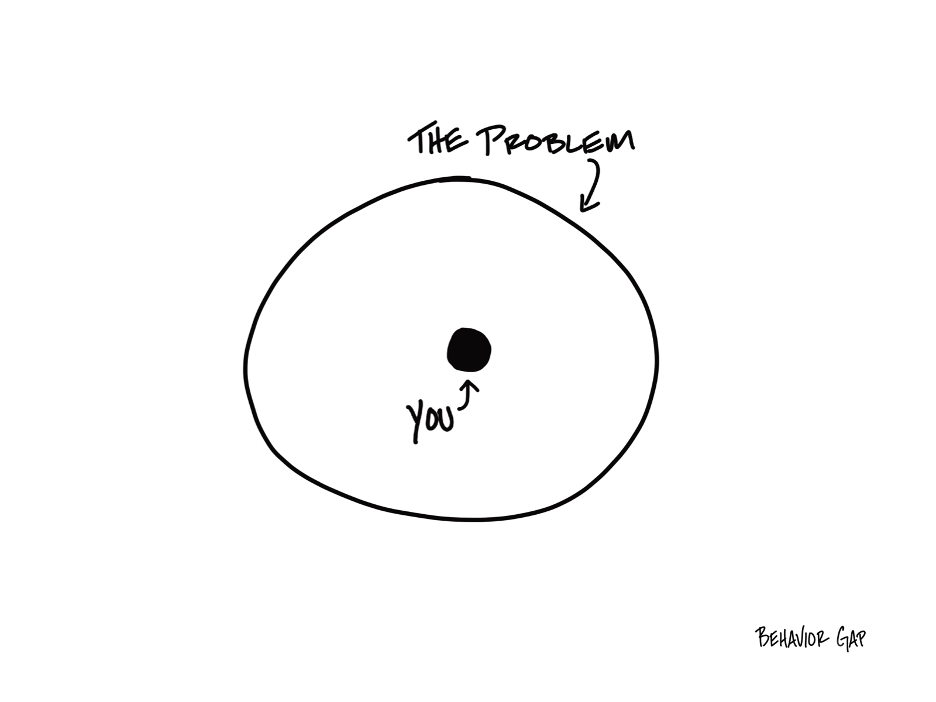
In psychology, there is a concept called psychological flexibility.
It is the ability to respond to obstacles successfully while continuing to move toward your chosen goals, even when the path is emotionally tough.
It means you acknowledge and accept your emotions. You do not pretend they are not there. But you also do not let them control you.
For financial professionals, this is more than a theory. It is a survival skill.
Markets will rise and fall. Clients will sometimes make impulsive decisions. Regulators will change rules. Competitors will try to lure away your clients. These events will trigger emotions such as frustration, fear, anger, self-doubt.
The easy reaction is to let those emotions take the driver’s seat. To panic when clients panic. To abandon your process because the noise is too loud. To take shortcuts because the long game suddenly feels hard.
Psychological flexibility is about doing the opposite.
You feel the fear but still follow your plan. You hear the noise but stay committed to your clients’ long-term interests. You acknowledge the frustration but still make the next right call.
Think about it like a seasoned marathon runner. Midway through the race, their legs hurt. Their lungs burn. The weather changes. The crowd starts disappearing. They do not deny these challenges. But they keep moving toward the finish line because they know why they started.
In your work, your “finish line” is your clients’ success. It is their financial security. Their ability to live the life they have imagined.
When you practice psychological flexibility, you stop letting temporary discomfort dictate permanent decisions. You focus on what matters, even when it is hard.
That is how you become the kind of financial professional your clients can trust. Not because you never face challenges. But because you keep moving forward, no matter what.
Similar Post
Nano Learning
Busy ≠ Effective
A financial professional recently told me, “I’ve never been this busy.” Calls. Reports. Product updates. Market commentary. Chasing transactions. Fixing a KYC error.
27 June, 2025 | 3 Minute Read
Nano Learning
Did you know this 12X Difference?
According to McKinsey’s latest US Asset Management Report, the gap in valuations between the best and the rest is 12X.
Aren’t you shocked or surprised?
Similar or higher diffe ....
Read More
2 July, 2021 | 3 Minute Read
Nano Learning
The Two Virtues
David Brooks in his book “The Road to Character” wrote about the distinction between resume virtues and eulogy virtues.
Resume virtues are things such as income, net worth, yo ....
Read More
13 October, 2023 | 2 Minute Read
Nano Learning
Customer Service versus Expertise
There is often a lot of confusion between customer service and expertise. Many in our profession believe that their customer service is what differentiates them from their competit ....
Read More
12 November, 2021 | 2 Minute Read
Nano Learning
The 5 Be’s
I launched this blog in January 2020 with a few posts (Today there are close to 300). One of them was To DO List and To BE List. In case you don’t recollect it, I would encourage ....
Read More
8 September, 2022 | Minute Read
Nano Learning
Something Powerful to Learn from Air Pods
I saw this chart sometime in 2021. It absolutely blew my mind.
Did you know Apple’s revenue from AirPods was $23.05 billion in 2020? This was as high as Netflix, 25% lower than T ....
Read More
8 April, 2022 | 2 Minute Read


- 0
- 0
0 Comments